Ordered a PCM from shipecm.com. It arrived yesterday and replaced today.
Mine was sometimes idling rough and mpg was horrible. Newly installed pcm seems better idling, hope appetite will lowering soon. ;)


Ordered a PCM from shipecm.com. It arrived yesterday and replaced today.
Mine was sometimes idling rough and mpg was horrible. Newly installed pcm seems better idling, hope appetite will lowering soon. ;)
Replaced a little leaky front axle passenger side oil seal. Actually lip seems good but spring seems damaged
Fuel pressure tested and:
- 39psi at idle and vacuum disconnected, there was no change
- found a leak in the vacuum line between fuel pressure regulator and manifold.
- replaced a vacuum line and got 39psi key turn, 31psi at idle and jump to 39psi when vacuum line disconnected.
key ON

Engine run - no response when disconnecting fuel pressure regulator vacuum line.

key OFF

Replaced vacuum line and checked again.
key ON

Engine run

Vacuum line disconnected

engine OFF

Spark plugs replaced, NGK V-Power Spark Plug ZFR5N.
Hatch latch replaced with a used one, mine was worn out and rattling.
Transmission is not changing gear while cold and suspected solenoids. Dropped a transmission pan.
- found 3 10mm bolts on magnets
- oil screen is holding just 1 bolt
- fluid is red, no bad smell, no water etc
- magnets is clean
Solenoids were cleaned with carb cleaner and they were working normal under 12V test.
Pan installed back and topped up with new fluid, will see how gear changes.
After long winter, finally spring arrives.
Started and successfully finished transfercase rebuild using
1. NP242 TRANSFER CASE CHAIN BORG-WARNER HV-028 1" WIDE 36 LINKS
2. SKF STCK242 Transfer Case Overhaul Kit
filled with S-Oil Seven ATF III
It was leaky all around, front & and rear output, shifter linkage etc.
Bearings were not so bad, all were somehow noisy, magnet is covered with an amount of very fine metal dust.
Recently had a chirping noise from underside. It sounds while driving and faster than tire rotation. Suspected front drive shaft double joint, but there was no unnecessary movement, everything seems okay. Checked rear driveshaft u-joints and found axle side one was shot. Replaced it with Moog 280 one.
https://www.onallcylinders.com/2012/03/30/quick-guide-to-diagnosing-differential-driveline-noises/
We don’t know which sounds worse—car guys singing show tunes in the shower or a howling differential. While there is no help for our singing, we can help you diagnose the sounds coming from a differential gone bad.
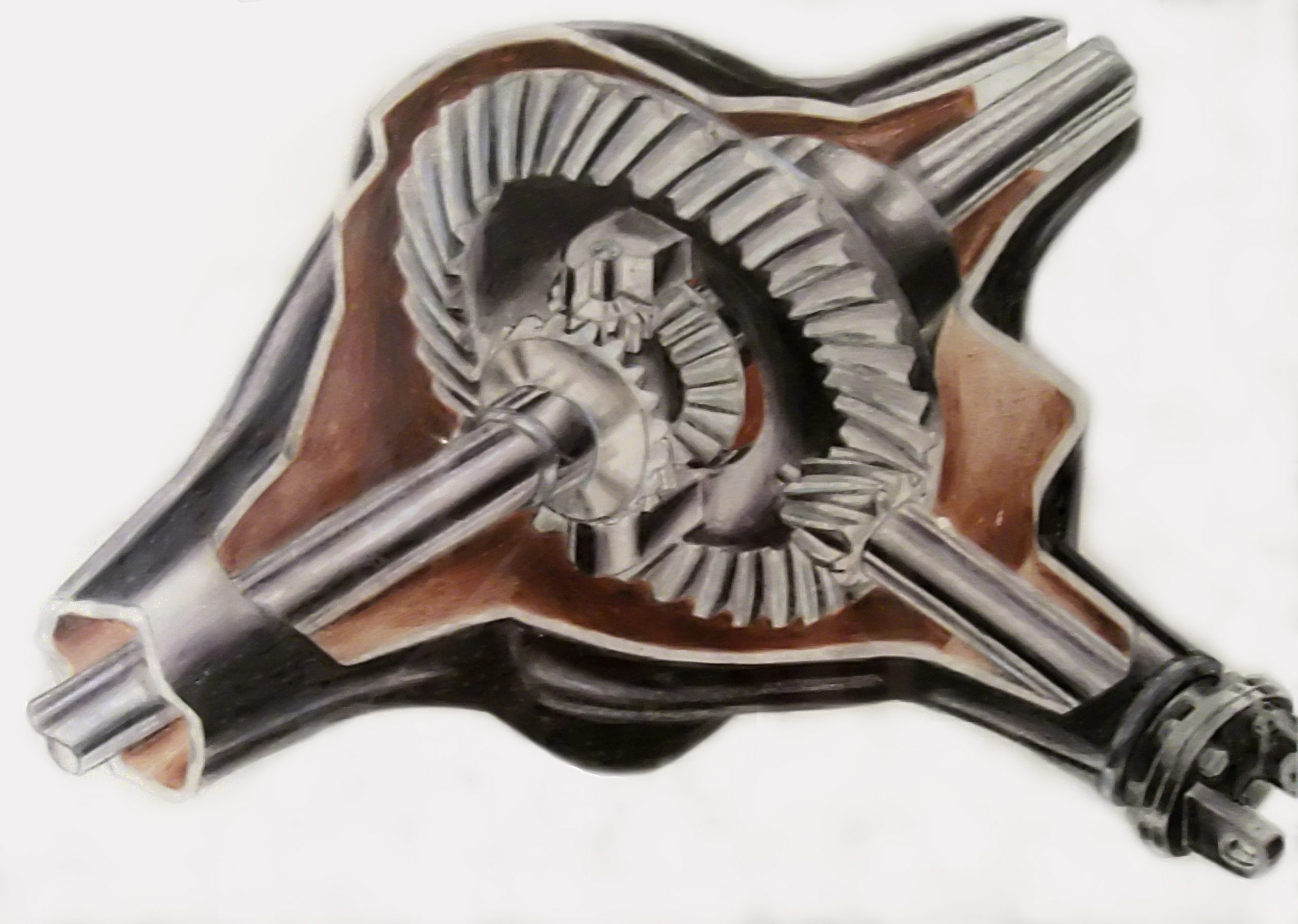
A clunk, whine, or howl can signal a worn-out pinion gear, bad pinion bearings, or a faulty gear installation. Sometimes, the noise is not differential-related, but is caused by other driveline or axle components. This guide will help you match up the noise you’re hearing with the differential or axle component making it, or at least get you in the ballpark.
Noise: Howl while decelerating (gears previously quiet)
Cause: Loose pinion bearing preload
Noise: Howl with whir or rumble while accelerating at any speed (gears previously quiet)
Cause: Worn rear pinion bearing or worn gear set
Noise: Howl without whir or rumble while accelerating at any speed (gears previously quiet)
Cause: Worn gear set due to lack of lubrication or overloading
Noise: Howling while accelerating over a small speed range (gears previously quiet)
Cause: Worn gear set due to lack of lubrication or overloading
Noise: Howling after gear set installation
Cause: Faulty gears or improper installation
Noise: Low-pitch rumble at all speeds over 20 miles per hour
Cause: Worn carrier bearings
Noise: Whirring during acceleration/deceleration at about 10 miles per hour
Cause: Worn pinion bearings
Noise: Banging or clunking while making a turn,
backing up, or rapid deceleration (like on a freeway off-ramp). Noise
gets worse in warmer weather
Cause: Posi chatter due to improper lubrication; worn clutches or spider gears; improper assembly
Noise: Banging, crunching, or popping while making a turn. Noise not affected by temperature
Cause: Badly worn or broken spider gears
Noise: Banging or heavy clicking every two to three feet during acceleration and deceleration
Cause: Damaged or broken pinion gear tooth or teeth
Noise: Banging or heavy clicking every two to three feet during acceleration or deceleration, but not both
Cause: High spot or heavy chip on pinion gear tooth
Noise: Banging or heavy clicking every eight feet during acceleration and deceleration
Cause: Damaged or broken ring gear tooth or teeth
Noise: Banging or heavy clicking every eight feet during acceleration or deceleration, but not both
Cause: High spot or heavy chip on ring gear tooth
Noise: Clicking while decelerating from 20 miles per hour to a complete stop
Cause: Worn carrier case-side gear bores
Noise: Rumble or clicking that gets worse during hard turns
Cause: Bad wheel bearings
Noise: Driveline squeaking or grinding at any speed
Cause: Worn or damaged U-joints
Noise: Clunking when depressing the throttle pedal (takeoff)
Cause: Worn U-joints; worn spider gears; worn axle splines; excessive gear backlash; loose yoke splines; worn slip yoke splines
Noise: Clunk immediately after taking off from a stop
Cause: Worn slip yoke splines
Noise: Steady vibration that increases with speed
Cause: Worn U-joint or out-of-balance driveshaft
Noise: Cyclic vibration that varies in intensity. Intensity increases at a specific speed range, worsens during deceleration
Cause: Pinion angle too low (not parallel with front yoke on driveshaft)


